Drop onto the SS Skaala and you soon find the wreck’s defining feature.
It is not the boilers. It is not the triple-expansion engine. It is not even the visible damage from the torpedo that sank her.
It is the cargo.
The holds of this Norwegian steamer are packed with dense, dark blocks that look almost too regular to be coal. They are often called coal blocks by divers, which is fair enough underwater. Technically, though, they are patent fuel briquettes: factory-made blocks of compressed fine coal and pitch.
They were made to be handled, stacked, exported and burned. More than a century later, they still make the Skaala one of the most distinctive wreck dives off South Devon.
A brief story of the SS Skaala
The Skaala was a Norwegian steamship, built in Bergen in 1906. On Boxing Day, 26 December 1917, she was travelling from Port Talbot to Rouen with a cargo of patent fuel.
Her holds contained 1,515 tons of the material, roughly 1,540 tonnes in modern metric terms.
At about 2.45 pm, the German submarine UB-35, commanded by Karl Stöter, struck the Skaala with a torpedo on her starboard side, around four miles west of Prawle Point.
The explosion killed the second engineer and started a fire in the engine room. The starboard lifeboat had been destroyed, so the surviving crew launched the port boat. Within about four minutes, the Skaala had sunk beneath the Channel.
The survivors were picked up by a patrol vessel and landed at Dartmouth.
Today, the wreck lies upright on the seabed off South Devon. Her cargo remains one of the clearest links between the diver and the final voyage of the ship.
These are not ordinary lumps of coal
The blocks in the holds are known as patent fuel. They were a form of coal briquette, produced on an industrial scale in South Wales during the late nineteenth and early twentieth centuries.
Coal mining created vast amounts of small coal, dust and broken fragments. This material could be awkward to use as loose fuel. It was harder to handle, easier to waste and less convenient to load into ships.
Patent fuel turned that awkward by-product into a commercial cargo.
Manufacturers mixed fine coal with pitch, a heavy residue produced during the distillation of coal tar. The mixture was heated until the pitch softened and bound the coal particles together. It was then pressed or rammed into moulds before cooling into solid blocks.
The result was a dense, durable fuel brick.
It was a simple idea, but an effective one. South Wales had coal, industrial infrastructure, ports and a ready export market. The region became a major producer of patent fuel, with France among its important customers.
Why make coal into blocks?
Patent fuel solved several practical problems.
Loose coal created dust. Fine coal could be difficult to shovel and manage. It could also shift around in a ship’s hold and become a thoroughly annoying cargo for everyone involved.
The regular blocks made loading and stowage much easier.
They stacked neatly in holds. They used space efficiently. They were less likely to break down into dust during transport. A ship could carry a dense, organised cargo rather than an untidy mass of loose coal.
That mattered on long export voyages.
Museum Wales holds a patent fuel block recovered from the Skaala. It measures approximately 26 cm by 21 cm by 17.5 cm and weighs just over 12 kg. That gives you a fair idea why they feel surprisingly substantial underwater. You are not looking at fragile coal. You are looking at industrial fuel, compacted and hardened for transport.
Crown Patent Fuel and the Cardiff connection
Many of the blocks found on the Skaala are stamped with a crown emblem and the word Cardiff.
They are associated with the Crown Patent Fuel Company, one of several South Wales firms producing briquetted fuel for export. The exact wording on the blocks became part brand, part proof of origin and part practical mark for a global trade.
The term “Cardiff” carried weight in the coal trade. Cardiff and the wider South Wales coalfield had an international reputation for high-quality coal and fuel products.
The Skaala was loaded at Port Talbot rather than Cardiff, but the branding reflects the wider industrial world from which the cargo came. South Wales was not simply exporting coal. It was exporting processed fuel, designed for predictable handling and efficient shipment.
What were the blocks used for?
Patent fuel was intended for heavy-duty use.
It could fuel steamships, railway locomotives, industrial boilers and other large-scale steam systems. Its regular shape and dense construction made it useful where fuel had to be moved, stacked and fired in quantity.
It was also useful for export because it travelled well. Museum Wales notes that the blocks stacked efficiently and took up less space than loose coal. Crown Patent Fuel was supplied to expedition ships as well as commercial users, including vessels linked to Antarctic exploration.
The Skaala’s cargo was heading for Rouen in wartime France. The surviving records confirm the destination and the cargo, but they do not identify the eventual customer. It may have been intended for transport, industry or another wartime fuel requirement. The certainty ends at Rouen, as historical paperwork so often does just when it might become interesting.
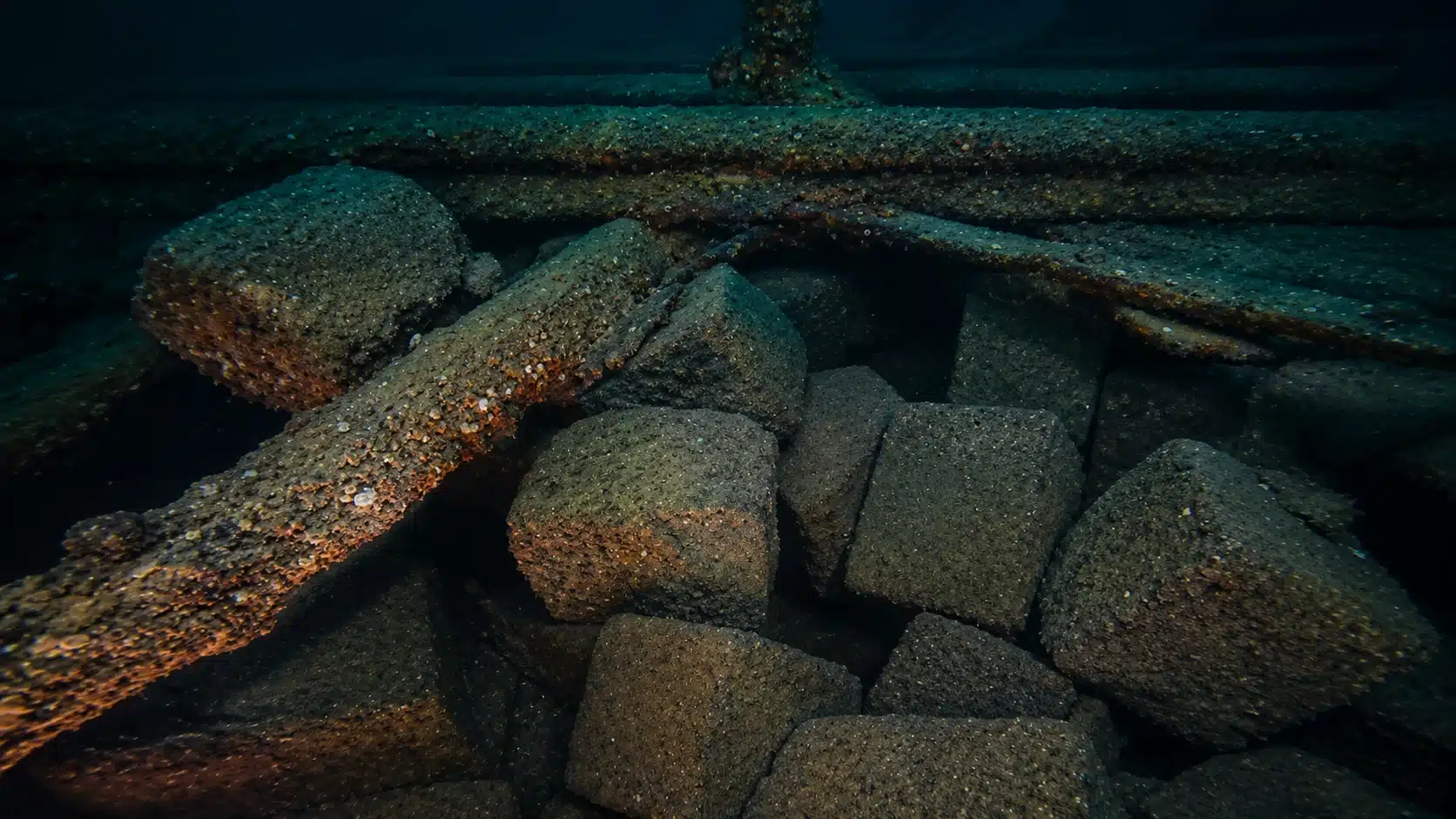
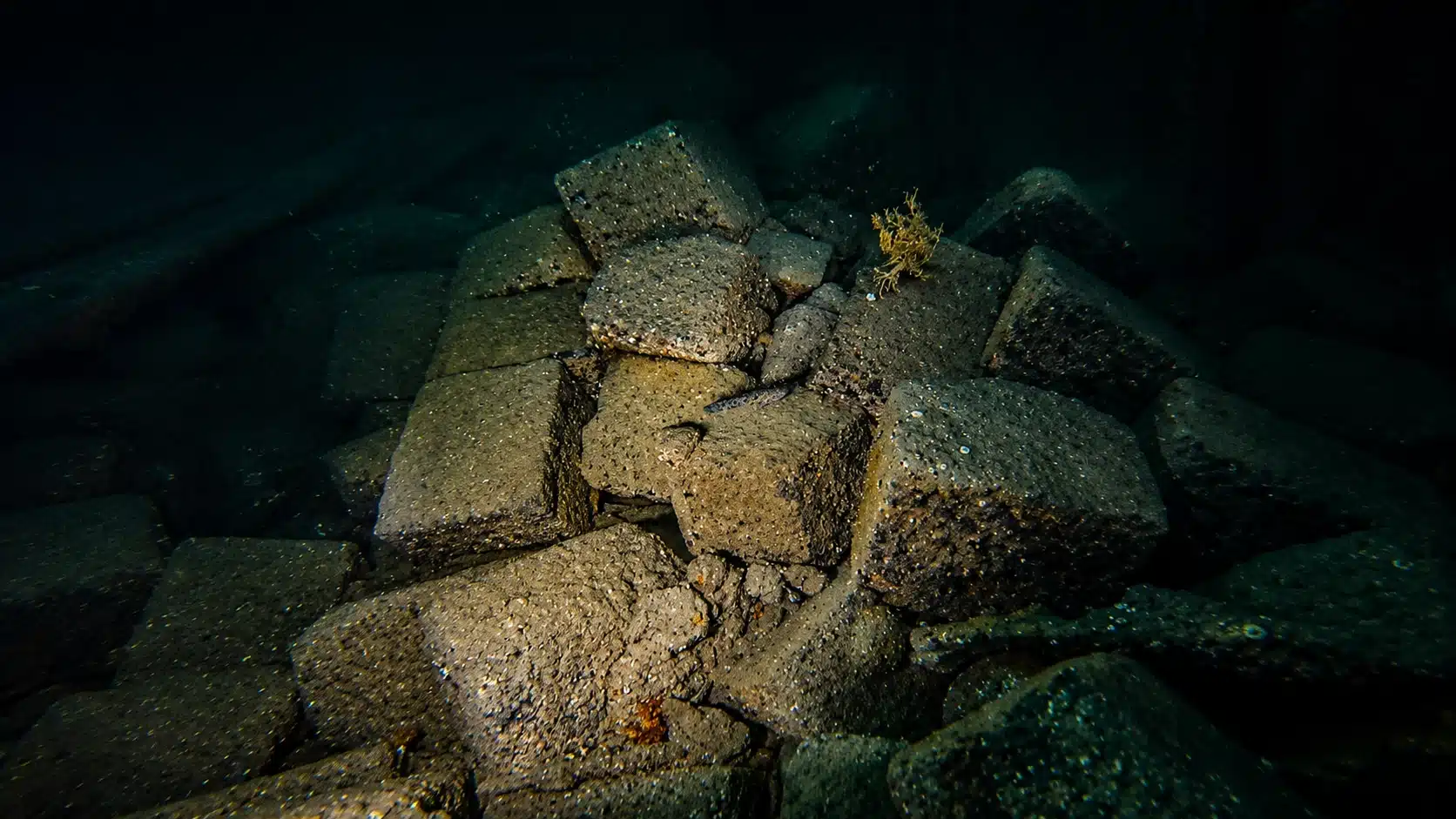
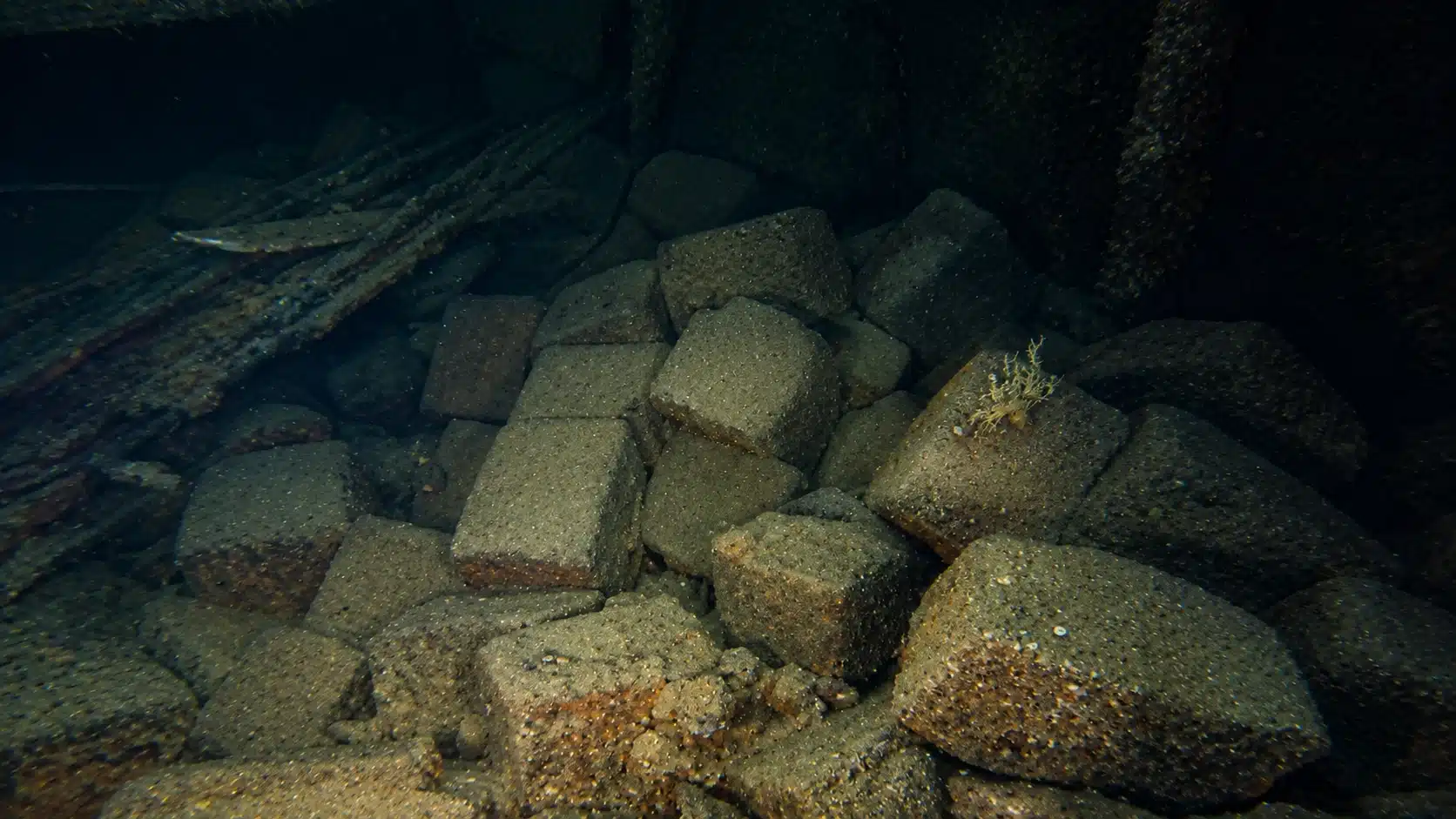
The cargo that defines the dive
For divers, the patent fuel blocks give the Skaala an immediate identity.
A ship’s cargo often tells you what it was doing when it sank. On the Skaala, the story remains visible in the holds.
These blocks began life as fine coal that might otherwise have had little value. Workers mixed, heated and pressed it into uniform briquettes. It was loaded in South Wales, bound for France and lost in a U-boat attack during the final year of the First World War.
Now it lies on the seabed, still stacked in the wreck.
The Skaala is not simply a torpedoed steamer. It is a time capsule of South Wales industry, wartime trade and the practical business of keeping steam-powered Europe moving.
That is why the coal blocks matter.
Sources
- Historic England research record for SS Skaala.
- Amgueddfa Cymru, Museum Wales, Crown Patent Fuel Block.
- Amgueddfa Cymru, Museum Wales, Fuelling Antarctic Exploration: The Crown Patent Fuel Company in Cardiff.

![Read more about the article SS Luxor [+1918]](https://scuba.to/wp-content/uploads/2022/06/Moss-Steamship-Company-300x169.png)
![Read more about the article SS Bangarth [+1917] and War Crimes of Hellmuth Max von Ruckteschell](https://scuba.to/wp-content/uploads/2022/06/SS-Bangarth-300x169.jpg)
